
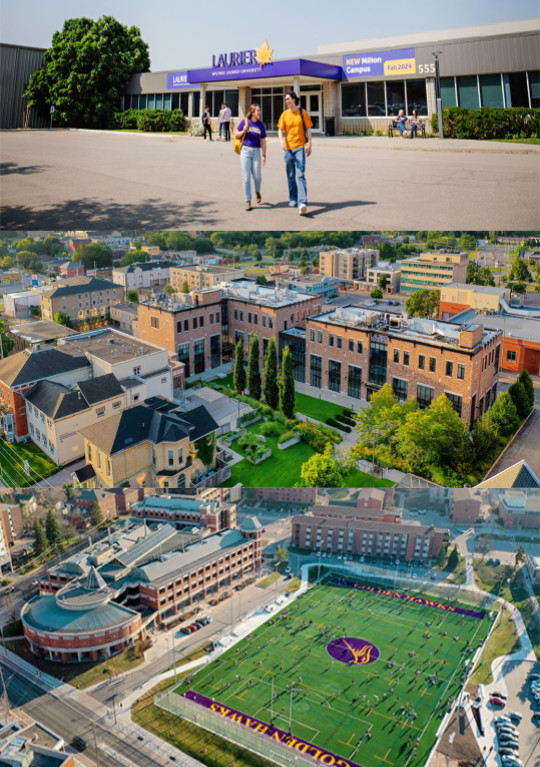
How awareness and reputation vary across Laurier’s three campuses
Wilfrid Laurier University may operate across three campuses, but student perceptions suggest the experiences and reputations are far from equal.
In a recent student poll conducted across Laurier’s Brantford and Waterloo campuses, respondents were asked about their awareness of Laurier’s different campuses, their reputations, and whether they believe their home campus receives adequate support from the university. While most students were aware of all three campuses, opinions varied widely, particularly when it came to Brantford and Milton.
Unsurprisingly, Waterloo continues to be viewed as Laurier’s “main” campus. Multiple Waterloo-based students described it as the most recognizable, well-promoted, and active campus. One first-year film studies student noted that when people hear the name Laurier, “they usually think of the Waterloo campus the most,” citing its central location, number of events, and overall visibility.
Waterloo students generally rated their home campus positively, often giving it a 4 out of 5. Several respondents emphasized its size, range of programs, and frequent activities as key strengths. A third-year biology student described Waterloo as “close knit, small, fun,” while others pointed to the abundance of campus life and resources.
Perceptions of the Brantford campus were more complex. While many students, including those based in Waterloo, rated Brantford’s reputation as “good,” several Brantford students expressed frustration with what they see as a lack of institutional support. Third-year law & society student Mallika Badwal described Brantford as feeling like “an afterthought,” explaining that it often feels like a separate university rather than an integrated part of Laurier.
“There seems to be a noticeable gap in resources, attention, and overall campus life, which can be discouraging,” Badwal said, adding that the campus has strong potential due to its smaller, close-knit community but needs more investment to reach it.
Other Brantford students had similar concerns, pointing to limited course offerings, fewer amenities, and a lack of social and study spaces. One third-year forensic psychology student described the campus as “forgotten about,” citing gaps in funding, sports, and facilities despite strong professors and academic experiences.
That said, not all feedback about Brantford was negative. Several students emphasized that the campus is “not as bad as people say it is,” talking about the supportive community of students and faculty. A third-year law and society student acknowledged the underfunding but praised the campus culture, saying the community helps offset some of the structural shortcomings.
Milton, Laurier’s newest campus, appeared to be the least understood. While most respondents were aware of its existence, many admitted they had little to no opinion on its reputation. Some students described Milton as under-promoted, with one Waterloo student bluntly stating, “Promote Milton more — they get nothing.” Some students said they had only heard that the campus is small, with limited programs, though some viewed this as a potential benefit for commuters.
Overall, the poll suggests that while Laurier students recognize the strengths of each campus, many feel that attention and resources are unevenly distributed. As Waterloo continues to dominate Laurier’s public image, students at the Brantford and Milton campuses are left wondering whether their campuses receive the same level of support and whether the Laurier experience truly feels unified across locations.



Leave a Reply