This book isn’t just about “fixing yourself,” but understanding that you are your own obstacle.
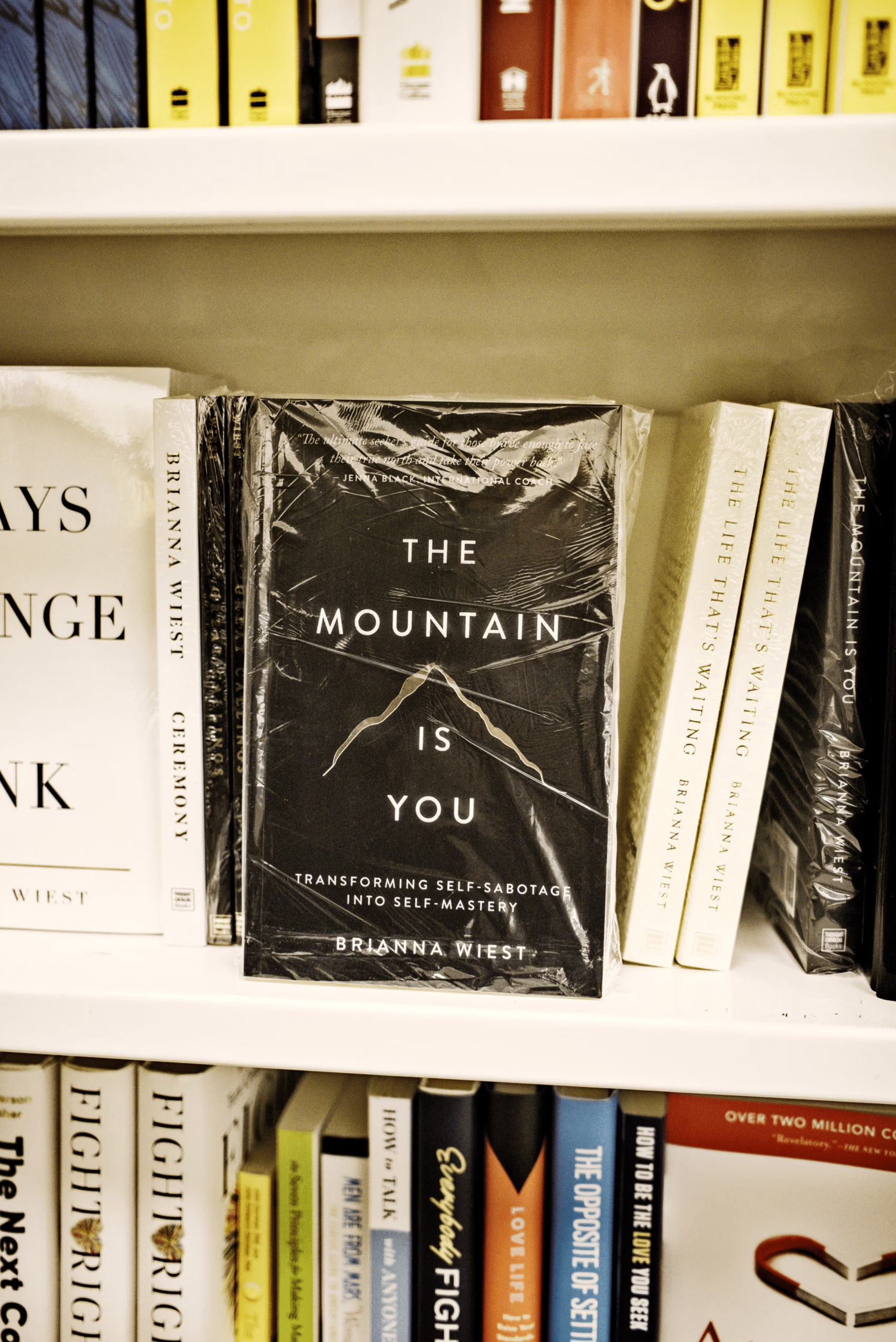
I genuinely believe everyone in their 20s should read the book, The Mountain Is You, by Brianna Wiest, and I’m saying that as someone who thought self-help books were kind of embarrassing. But, this one is different. It doesn’t sugar-coat, it isn’t cliché and it doesn’t pretend healing is pretty or linear; you’re allowed to feel what you feel.
The book forces you to look at yourself and realize how many problems in your life aren’t random or unlucky. They come from patterns you’ve created, protected and repeated without noticing. And honestly? That is exactly what people in their 20s need.
Your 20s are basically one long identity crisis. You are trying to build a career while healing childhood wounds, maintaining friendships, dating people, learning boundaries and pretending you’re fine even when you’re not. So many of us sabotage ourselves during this time, whether it’s picking emotionally unavailable partners, quitting things too soon, letting fear make our decisions, or staying stuck because it feels safer than changing.
One line hit me so hard I had to stop reading: “Self-sabotage isn’t self-destruction — it’s self-protection disguised as fear.” That’s when I realized most of us aren’t really broken, but scared. And we’re making choices from fear, comfort, or patterns we inherited.
Your thoughts are not you. They’re reactions your brain learned from old wounds. When certain situations feel triggering, your mind defaults to the familiar, even if the familiar is toxic. Your brain thinks it’s protecting you because your body is comfortable with the patterns you grew up with. But, you choose whether to act on those thoughts. Staying where you are hurts more than choosing to grow.
If you avoid conflict now, you’ll avoid it forever.
If you let fear make your decisions now, it will keep running your life. You will never grow and become the person you want to be.
If you settle now, you’ll settle every decade after this.
Wiest pushes you to stop blaming the world and actually take responsibility; even if your wounds are not built by you, but through others. Wiest tells you the truth: “Growth is uncomfortable, messy and necessary.” And it is.
Healing means admitting that your past affected you.
It means walking away from people you care about.
It means raising your standards.
It means letting go of your old identity: the version of you that learned to survive yet pulls you back the moment you start to grow because it feels “unsafe.” This book gives you language for your confusion. It gives you a mirror you can’t ignore. It forces you to stop waiting for life to fix itself and start becoming the person who can handle the life you want. It also reminds you that healing isn’t supposed to feel good at all times.
You don’t wake up one day and suddenly become “healed.”
You slowly outgrow the habits that kept you “safe” but small.
You start choosing what’s right instead of what’s easy.
And you stop allowing people to access the unhealed version of you. However, none of this can happen without discomfort.



Leave a Reply