
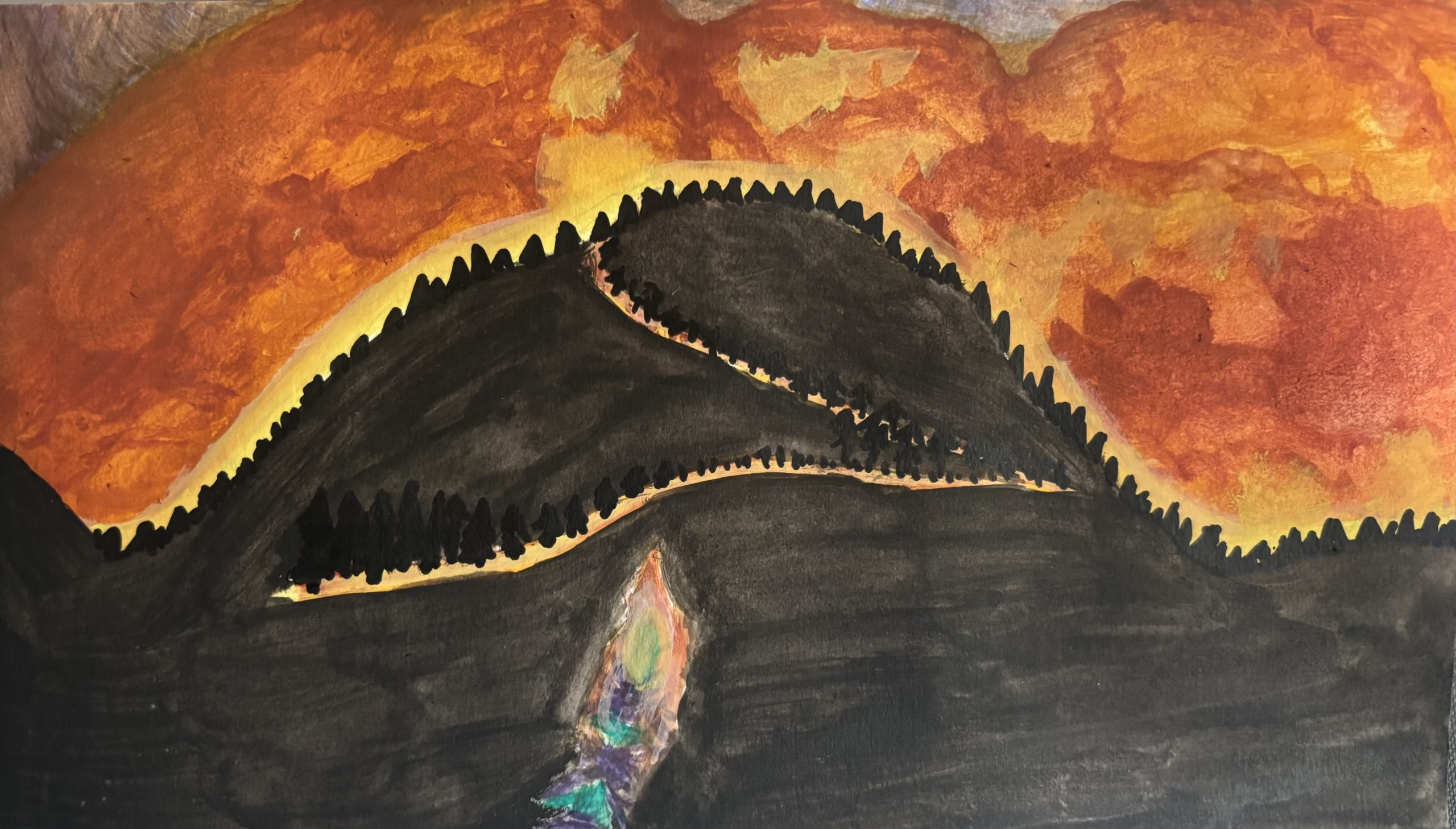
The first thing we saw was the smoke. A smudge of grey in the distance, beyond the hill, so small and unassuming you could barely notice it between the trees unless you focused hard enough. People camped out here occasionally; it wasn’t crazy to see signs of a bonfire. Sometimes I would steal a few of their marshmallows if I was lucky and they camped near my tree.
But this time there was no end. We thought maybe they were the kind of people who throw caution to the wind and let the fire die out on its own, which usually takes a day or so or at worst needs our intervention.
A week later, however, the smoke was ever present. With each passing day, it crept closer and grew darker. We went about our daily lives, not speaking about it at first. It’d blow away soon, most things always did. And besides, the forest was alive and well, full of birdsong and colour since the first trees had begun shaking their leaves out of their buds and flowers bloomed at their roots. I particularly loved the hyssop flowers at the foot of my tree; I can just see them outside of my hollow.
This issue refused to be ignored. The birds had stopped singing. The now black smoke curled around the hill until it reared its ugly head and licked the sky, dirtying the clouds it touched. If the wind blew the wrong way, you’d catch a whiff of burning wood. And yet we burrowed into our holes, settled under and in our trees. There were young to raise; there was the food chain to maintain.
We were in denial, I think, confused and angry that collectively we had done nothing to prevent this. Usually, the moose and the turtle would gather water from the river and drench the bonfire so it would not grow. Even if they were too late, flames rarely ever tried to climb over the hill, the land contained their burn.
Only when the sky above was pitch black all day, not just all night, did we begin our panic. Even the quietest of animals suffered coughing fits, the soot filling the air till my eyes burned, and one couldn’t be outside their hollow without a thick layer of ash covering them. The hill had become ablaze, glowing red and orange against the darkened sky, our new northern lights.
The birds were the first to flee, flying low to the ground. Only they could see the true devastation coming our way. Like everyone else, I was too slow. I awoke to a crackling sound outside of my hollow, and a warmth greater than any summer. Sticking my head out, my forest was burning. My hyssops shrivelled and fell to the forest floor, so crisp they crumbled into dust in my hands. The bark on my tree was curling off, its fresh new leaves disappeared several at a time.
Running was the only option. I followed the exodus of creatures big and small from the place we had called home. We all had burns, but at least we had made it out to the road and the rivers and the meadow and the cities. More weary, more cautious.



Leave a Reply