
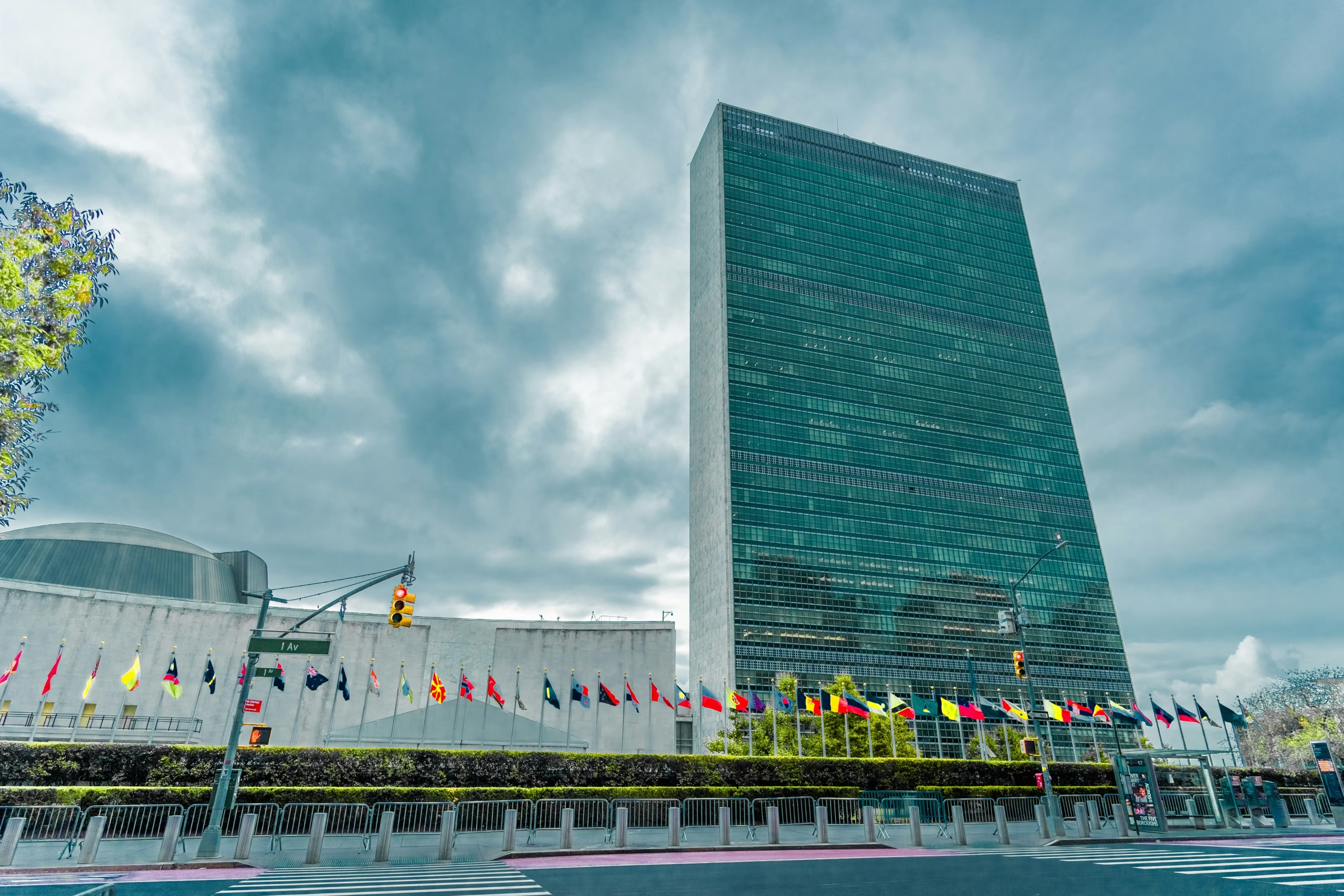
UNITED NATIONS – The 81st United Nations General Assembly opened this week under a contradiction that has become difficult to ignore: the institution charged with defending sovereign equality is meeting while major powers increasingly treat military force, sanctions and tariffs as routine instruments of diplomacy.
The general debate began Tuesday under the theme “Restoring trust, managing transformation: A United Nations that delivers for all.”
UN Secretary-General António Guterres used the opening of the general debate to warn that peace requires the restraint of power by law. The warning landed against the backdrop of the U.S.-led war on Iran, renewed fighting across the Middle East and growing questions about whether the UN can restrain permanent Security Council members or close allies.
U.S. President Donald Trump offered a markedly different vision from the same podium. Trump defended the war against Iran and threatened to “annihilate” the Islamic Republic if negotiations fail.
Trump also highlighted the U.S. operation that captured Venezuelan President Nicolás Maduro – an act widely considered illegal under international law, defended expanded American military dominance in the Western Hemisphere and renewed attacks on the International Criminal Court.
The speech placed coercion at the center of American foreign policy at the same meeting where the UN leadership was calling for de-escalation. Washington has also used economic pressure against allies.
Reuters reported Monday that new U.S. tariffs could push Canadian fourth-quarter growth below one per cent, according to Bank of Canada Governor Tiff Macklem, after another breakdown in Canada-U.S. trade negotiations.
Israeli Prime Minister Benjamin Netanyahu deepened the divide two days later. Dozens of diplomats walked out of the General Assembly chamber as Netanyahu prepared to speak, prompting him to insult the departing delegates before defending Israeli attacks on Iran and describing the decision to strike Iranian nuclear facilities as one of the easiest decisions of his premiership of the pariah state.
The walkout reflected broader diplomatic frustration with Israel over Gaza, the occupied West Bank and the widening regional war. Guterres told the Assembly that the scale of killing and destruction in Gaza was unlike anything witnessed during the secretary-general’s tenure and warned that settlement expansion and displacement in the West Bank were eroding the possibility of Palestinian statehood.
Canada attempted to position middle powers as a counterweight to that disorder. Foreign Affairs Minister Anita Anand told the Assembly on Saturday that the global order is facing a “rupture” as great powers abandon economic co-operation and treat sovereignty with disdain. Anand also argued that Canada must reduce dependence on any single partner and build greater strategic autonomy.
The General Assembly can recommend collective measures but cannot impose binding Security Council action. Any permanent member can block a substantive council resolution with a veto.
This year, structural contradiction is unusually visible. The UN Charter promises sovereign equality and limits on force. The world outside the chamber increasingly operates through sanctions, blockades, tariffs, military intervention and strategic control over markets and territory.
For smaller states and middle powers, the question emerging from New York is no longer whether international law exists. The question is whether international law can still restrain states powerful enough to ignore it.
Sources
United Nations: General Assembly High-level Week 2026
United Nations: Guterres addresses the 81st General Assembly
Reuters: Trump’s UN address and Iran war
Reuters: U.S. tariffs and Canadian growth
Reuters: Delegates walk out during Netanyahu’s address
ABC News: Netanyahu’s remarks on Iran



Leave a Reply